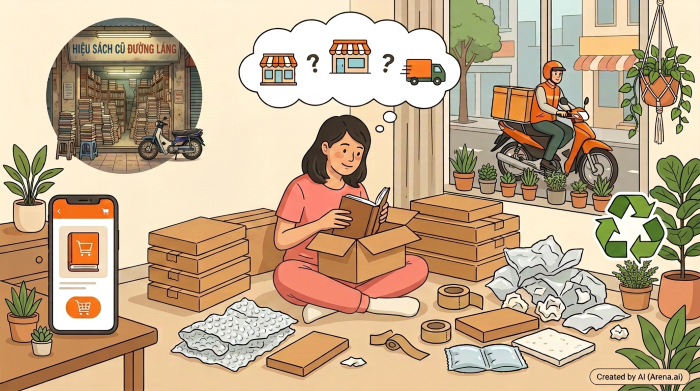
Last two weeks, I ordered several books via one of the most popular digital commerce platforms in Vietnam. The week after, I got seven packages on separate days. When I opened the packages, I was happy and curious about the book’s content. However, another part of me felt guilty when unpacking and seeing the package waste generated. Those are made from cardboard, tape, and damage-resistant plastic materials etc. It is simply too much just for one book. This is an example of online shopping in Vietnam, not only for books but also for the majority of goods and services, to my current experiences.
I am wondering how many people have ever seriously noticed this situation? Several questions remain in my mind:
- How to properly regulate the waste and emissions generated from these activities? The bookstore, the digital commerce platform, the shipping service? How to distribute the responsibilities?
- How can I, as a general customer, select the store or platform, or shipping services that are officially certified so that I can opt to support the digital and green economy in a more comfortable manner?
- How can we apply circular ecology tools in this case to boost the healthy competition and sustainable business models?
P.S.: In between, I still enjoy buying books at bookstores whenever I have time. Remembering my student time, discovering old bookstores, and suddenly finding books of interest, like going back to the past and wondering who the owners were 😊.
Nguyet Tran
This article was first posted on LinkedIn in November 2025.
The image is created by AI with commands from Nguyet Tran on 08/08/2026.
